
Caron Simply Soft Paints Won’t Show Color Gradients? Here’s the Fix
Caron Simply Soft Paints is designed to shift through beautiful color gradients as you work, but many crocheters and knitters find the transitions muddling into random pools instead of smooth fades. The issue isn’t the yarn—it’s how the dye lots interact with tension, stitch height, and working speed.
We’ve seen this frustration in hundreds of project photos, and the yarn color pooling fix almost always comes down to three controllable factors: consistent gauge, stitch selection, and how you manage color-change zones. This guide walks through each adjustment so your next Paints project delivers the gradient effect you expect.
Why Simply Soft Paints Pools Instead of Graduating
Simply Soft Paints uses a long-repeat dye application—each color segment runs 6 to 10 yards before transitioning to the next hue. When your row or round length nearly matches that segment length, the color change lands in the same vertical column stitch after stitch, creating a stripe or pool instead of a diagonal fade.
Inconsistent tension makes this worse. If you crochet loosely on one row and tightly on the next, each row consumes a different yardage of the color segment, breaking the rhythm the dye pattern needs to graduate smoothly.
The same steel-crimp twist found in Simply Soft Speckle isn’t present here—Paints uses a softer three-ply construction that shows tension variation more visibly, so small gauge shifts have outsized effects on how color lands.
Adjust Your Stitch Height to Break the Pool Cycle
Switch to a Taller Stitch
If you’re working single crochet and seeing harsh vertical bands, move to half-double or double crochet. Taller stitches consume more yardage per row, which shifts where each color segment begins and ends.
A row of double crochet uses roughly 40 percent more yarn than the same width in single crochet, enough to offset the dye repeat and let colors cascade diagonally instead of stacking.
Combine Stitch Heights Within Rows
Alternating a row of single crochet with a row of double crochet creates varying yardage consumption, deliberately throwing the color-change point off its vertical track. This irregularity is what gradients need—predictable repetition is what pools them.
Control Tension Through the Transition Zone
The four or five stitches where one color bleeds into the next are the most sensitive to tension variation. Pulling tighter here compresses those transition stitches into a narrow band, making the gradient look abrupt.
Maintain the same hand position and yarn feed speed across every stitch in that zone. If you habitually tug the working yarn after completing a stitch, stop—it shortens the stitch just formed and condenses the color shift.
Mark Your Gauge Check Points
Every ten rows, measure your row height with a ruler. If row eight is taller than row three, your tension drifted and the next color segment will land in a different spot than the dye pattern expects. Rip back and rework those rows at consistent tension before the pooling becomes irreversible.

When to Use Paints vs Other Caron Variegated Lines
Simply Soft Paints works best in large flat projects—blankets, shawls, wide scarves—where long rows let the gradient develop across many stitches. Small-circumference projects like hats or cowls rarely have enough stitches per round to show a smooth fade.
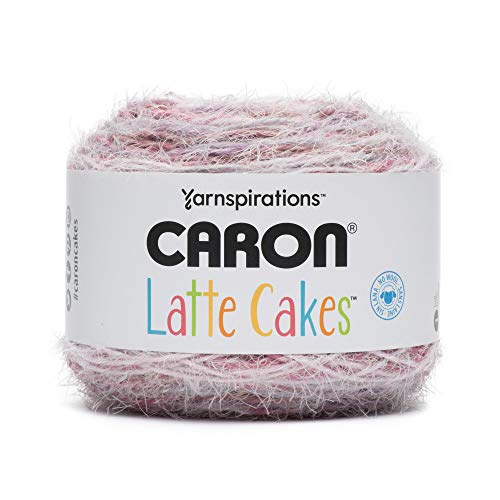
For tighter color shifts in smaller projects, Caron Cakes uses shorter dye repeats that cycle faster, better suited to rounds of 60 stitches or fewer. If you want a heathered look instead of gradients, Simply Soft Tweeds blends multiple plies in different shades so pooling becomes a design feature rather than a flaw.
Paints also shows more obvious pooling in garter stitch knitting than in stockinette, because garter’s horizontal ridges emphasize any color banding. Switching to stockinette or a lace pattern with varying stitch counts per row disrupts the pool and lets the gradient emerge.
Getting Consistent Gradients From Simply Soft Paints
Smooth color transitions in Simply Soft Paints require matching your stitch yardage to the dye repeat’s rhythm, which means deliberate choices about stitch height, tension consistency, and project width. Once you understand how row length interacts with color segments, you can engineer gradients instead of hoping for them.
Test every new colorway with a 20-row swatch before committing to a full project—what works for one color sequence may pool in another. The adjustments are simple, but they must be intentional.
Common Questions About Simply Soft Paints Gradients
Starting mid-skein moves where the first color lands, but it won’t fix pooling if your stitch count and dye repeat are mismatched. The pool will still form—it just begins in a different color.
The only reliable yarn color pooling fix is adjusting stitch height or tension so your row yardage no longer syncs with the dye segment length.
Washing won’t redistribute the dye or change segment lengths. If the finished piece shows pooling, it will look the same after washing.
Some crocheters report that blocking helps gradients appear smoother by evening out stitch heights, but it won’t eliminate pools caused by stitch-count alignment.
Colorways with high contrast between adjacent hues make pooling more visible. A transition from navy to pale yellow shows harsh bands even with perfect tension.
Low-contrast colorways—like those moving through adjacent warm tones—hide minor pooling because the eye blends similar shades more easily.
Once the piece is complete, the only fix is ripping back to where the pool started and reworking those rows with adjusted tension or stitch height. Surface techniques like duplicate stitch or embroidery can camouflage small pools but won’t create a true gradient.
If the pooling is confined to a few rows, consider adding a contrasting border or appliqué to draw the eye away from the banded section.
A larger hook creates looser stitches that consume more yarn per stitch, which can shift the color-change point enough to break a pool. Moving up one or two hook sizes is worth testing on a swatch.
Be cautious going too large—excessively loose fabric loses structure, and the color transitions may become so stretched that individual stitches show multiple hues instead of forming a cohesive gradient band.