
Caron Cakes Won’t Pool Colors? Here’s the Fix
You bought Caron Cakes specifically for that gorgeous color pooling effect, but your project looks nothing like the skein preview. Instead of bold horizontal stripes or planned pools, you’re seeing random blotches or no pattern at all.
This frustration is more common than you’d think, and it’s rarely the yarn’s fault. Color pooling depends on stitch count, tension, and how the color repeats line up with your gauge. We’ll walk you through why Caron Cakes color pooling isn’t working in your project and exactly how to fix it.
Why Your Stitch Count Controls Pooling
Color pooling happens when each row uses exactly the same length of yarn, so identical color sequences stack vertically. If your foundation chain has 47 stitches and the color repeat is 23 stitches long, you’ll never get clean pools — the math doesn’t divide evenly.
Most successful pooling projects use a stitch count that’s a multiple of the color repeat length. Measure one full color cycle on your skein (usually 18-28 inches for Caron Cakes), then work a gauge swatch to see how many stitches that length produces. Adjust your starting chain to match that number or a clean multiple of it.
Gauge Swatch Before You Commit
A 6-inch test square tells you whether your hook size and tension will cooperate with the yarn’s color sequence. If the swatch shows no pooling, try a hook one size smaller to tighten your gauge, or one size larger to loosen it. Small changes in how much yarn each stitch consumes can shift a chaotic pattern into organized pools.
Tension Consistency Makes or Breaks the Pattern
Even with the right stitch count, inconsistent tension will scramble your pools. If row five uses slightly more yarn than row four because you pulled tighter or worked looser stitches, the color sequence shifts forward or backward and the vertical stack breaks.
For projects where pooling is the goal, work slowly and check each row’s length against the previous one. Some crocheters mark the skein with a piece of scrap yarn every 20 stitches to track whether they’re using the same yardage per row. Others weigh each row on a kitchen scale — equal weight means equal yardage.
If you’re combining Caron Cakes with other self-striping yarns, remember that each brand’s dye lot and fiber composition affects pooling behavior differently, so test compatibility with a small swatch first.
Planned Pooling vs Accidental Pooling
Planned pooling is a deliberate technique where you control stitch placement to force specific color patterns — argyle, plaid, or chevrons. Accidental pooling is what happens when your stitch count accidentally aligns with the color repeat, creating pools you didn’t intend.
If you want NO pooling at all, choose a stitch count that’s NOT a multiple of the color length. A 53-stitch row with a 22-inch repeat will give you a more random, variegated look because the colors never stack in the same spot twice. Single crochet and half-double crochet in odd counts work well for this.
For intentional pooling, taller stitches like double crochet or treble crochet consume more yarn per stitch, which can help match the repeat length without needing an enormous stitch count. A scarf with 30 double crochet stitches might pool beautifully where 30 single crochet stitches would scramble the pattern.

Why Some Caron Cakes Colorways Pool Better Than Others
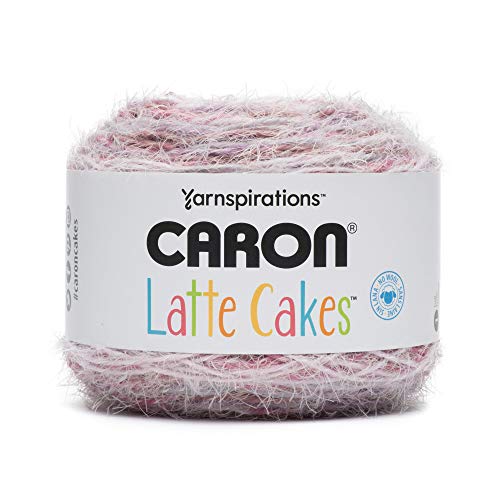
Not every Caron Cakes colorway has the same repeat structure. Some have short, evenly spaced color changes that pool easily in most stitch counts. Others have long, irregular transitions that resist pooling unless your gauge matches perfectly.
Colorways with high contrast between adjacent colors show pooling more clearly. If the yarn transitions gradually from teal to aqua to seafoam, even perfect pooling might look muddled because the eye can’t distinguish where one pool ends and the next begins. Bold, distinct colors like black-to-white or navy-to-coral make pools pop visually.
Before you start a large project, check online project galleries to see whether other crocheters achieved pooling with your specific colorway. If most finished projects in that color show random variegation instead of pools, the dye sequence might not lend itself to stacking.

Fixing Pooling Mistakes Mid-Project
If you’re halfway through a blanket and realize the pools are drifting, you have three options. First, rip back to where the pattern was still aligned and recount your stitches — one extra or missing stitch per row compounds over dozens of rows.
Second, adjust your tension for the remaining rows to compensate. If the pools are drifting left, work slightly tighter so each row uses less yarn and the color sequence catches back up. If they’re drifting right, loosen up a bit. This is fiddly and requires constant checking, but it can salvage a project without starting over.
Third, embrace the chaos and switch to a stitch pattern that looks good with random variegation. A shell stitch or granny square breaks up the visual field enough that failed pooling reads as deliberate color play instead of a mistake. No one will know you didn’t plan it that way.
Getting Consistent Pooling with Caron Cakes
Achieving reliable color pooling with Caron Cakes comes down to math, consistency, and a willingness to test before you commit to a full project. Measure the color repeat, swatch at your intended stitch count, and monitor your tension row by row.
If a colorway refuses to cooperate, that’s not a failure — it just means the yarn wants to be something other than a pooled project. Let it stripe, let it variegate, or choose a textured stitch that plays to the yarn’s strengths instead of fighting it. The most successful Caron Cakes projects are the ones where the maker worked with the yarn’s behavior rather than against it.
Common Questions About Caron Cakes Pooling Issues
Yes, but it requires trial and error with hook size and stitch count. Work multiple test swatches at different gauges until you find a combination where the color repeat aligns with your row length. Some colorways will never pool cleanly no matter what you do because the dye sequence is too irregular.
Blocking can even out stitch size and improve overall appearance, but it won’t reposition colors that already stacked incorrectly. If the pooling drifted because of tension inconsistency, blocking might make the fabric lie flatter and help the pattern read more clearly, but it won’t create pools where none existed.
Stitch count is the likely culprit. A small swatch might have 20 stitches that happen to match the color repeat, but when you scale up to 80 stitches for a blanket, the math no longer divides evenly. Always swatch at the exact stitch count you plan to use in the finished piece.
Double crochet consumes more yarn per stitch, so it can help match a long color repeat without requiring an impractically wide project. Single crochet works well for shorter repeats. The best stitch is whichever one gives you a stitch count that divides evenly into the color cycle length at your preferred project width.
Only if both skeins have identical dye lots and you start each skein at the same point in the color sequence. Even then, slight manufacturing variations can throw off the alignment. For pooling projects, it’s safer to work each skein separately or accept that pooling will break at the skein join.
Any stitch count change will shift the color alignment for all subsequent rows. If pooling is your goal, work a simple rectangular or flat piece with no shaping. Once you master pooling in a straightforward format, you can experiment with controlled increases that maintain the repeat math.